
You’re Never Going to Catch Me

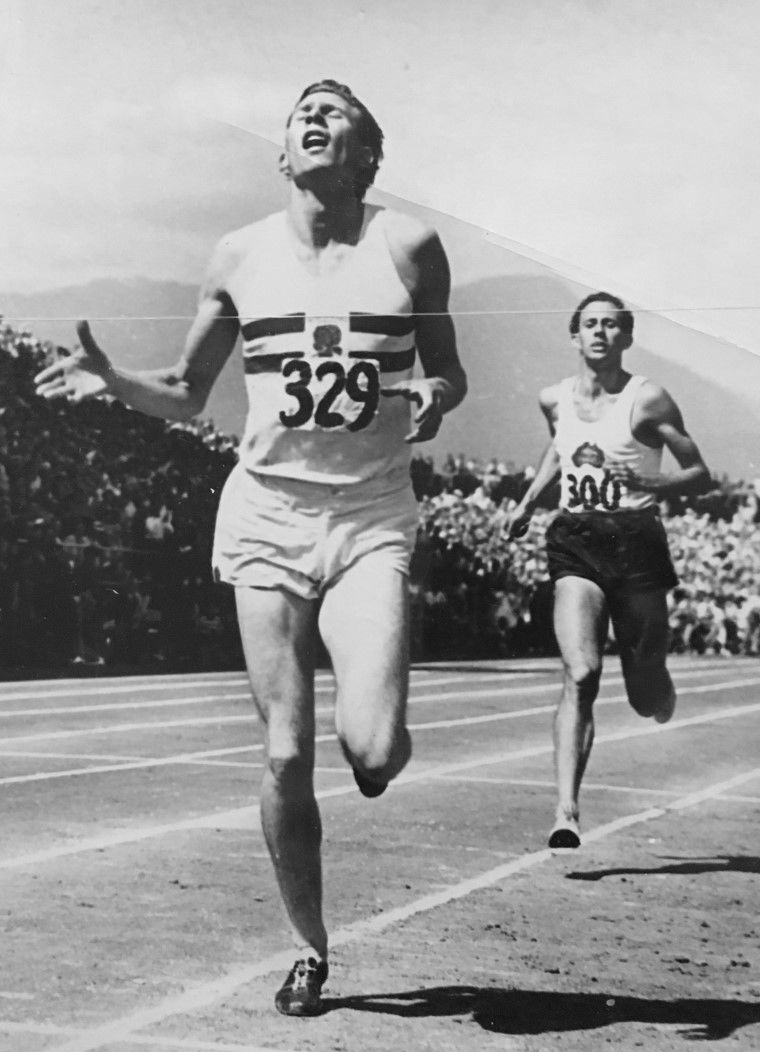
On May 6, 1954, Roger Bannister broke the four-minute mile. It is crazy to say today, more than 70 years later, that the athletic world thought this was literally impossible—as if man’s heart was going to explode if he tried. Well, Roger Bannister did not listen.
That story has always resonated with me because I’ve seen the same thing played out in business. Too often, we’re told that this is as good as it gets. But the people who achieve extraordinary things ignore those limits. They work harder, learn faster, and eventually surpass what everyone thought was possible.
The student surpasses the teacher
As helpful context, I did not start headhunting until I was over 40 years old. Sure, I had recruited friends and colleagues to work with me at some of my employers, helped friends land roles, even done on-campus recruiting way back in my early days of public accounting. 20+ years into a finance career in late 2019, I took the plunge and formed The Headhunters with a partner who wanted to strike out on his own leaving one of the largest search firms in the country. He recruited me into the business and, honestly, talked me into it. I am grateful he did!
Candidly —I knew very little about being an actual headhunter. My experience was mostly on the other side of the table: personally being placed as a finance executive candidate, and then occasionally using executive search firms to build my teams or find a talent my employers could not attract without help. What I lacked in experience as an actual headhunter I made up for with work ethic, real-world work experience, and a relentless drive to succeed.
My family of five was personally counting on me financially. I was not just “trying” out being a business owner and entrepreneur. When The Headhunters launched, my daily mentality was that my family would be homeless if I didn’t succeed —and succeed quickly. I was driven.
On May 6, 1954, Roger Bannister broke the four-minute mile. It is crazy to say today, more than 70 years later, that the athletic world thought this was literally impossible—as if man’s heart was going to explode if he tried. Well, Roger Bannister did not listen.
That story has always resonated with me because I’ve seen the same thing played out in business. Too often, we’re told that this is as good as it gets. But the people who achieve extraordinary things ignore those limits. They work harder, learn faster, and eventually surpass what everyone thought was possible.
The student surpasses the teacher
As helpful context, I did not start headhunting until I was over 40 years old. Sure, I had recruited friends and colleagues to work with me at some of my employers, helped friends land roles, even done on-campus recruiting way back in my early days of public accounting. 20+ years into a finance career in late 2019, I took the plunge and formed The Headhunters with a partner who wanted to strike out on his own leaving one of the largest search firms in the country. He recruited me into the business and, honestly, talked me into it. I am grateful he did!
Candidly —I knew very little about being an actual headhunter. My experience was mostly on the other side of the table: personally being placed as a finance executive candidate, and then occasionally using executive search firms to build my teams or find a talent my employers could not attract without help. What I lacked in experience as an actual headhunter I made up for with work ethic, real-world work experience, and a relentless drive to succeed.
My family of five was personally counting on me financially. I was not just “trying” out being a business owner and entrepreneur. When The Headhunters launched, my daily mentality was that my family would be homeless if I didn’t succeed —and succeed quickly. I was driven.

I was both a sponge and hard worker. I called on friends, colleagues and business owners that knew me. Some of them hired me and my new company to find them the talented people they needed, but had either failed to attract or the stakes were just too high to mess around without professional help. Sure, I was making my share of mistakes but I was also headed upstream into unchartered waters.
The good news was we had happy paying clients – the goal of any business owner. Things mushroomed for us. Clients started asking to broaden out our search capabilities to work on HR, supply chain, engineering, manufacturing operations, and executive roles. It was exciting to see our reputation grow alongside our capabilities.
I was both a sponge and hard worker. I called on friends, colleagues and business owners that knew me. Some of them hired me and my new company to find them the talented people they needed, but had either failed to attract or the stakes were just too high to mess around without professional help. Sure, I was making my share of mistakes but I was also headed upstream into unchartered waters.
The good news was we had happy paying clients – the goal of any business owner. Things mushroomed for us. Clients started asking to broaden out our search capabilities to work on HR, supply chain, engineering, manufacturing operations, and executive roles. It was exciting to see our reputation grow alongside our capabilities.
Sometimes you just have to say it
Behind the scenes, the math just was not working, and my partner and I had a business formula that was simply skewed against the highest revenue generator. The upshot was that I had become unequally yoked to a partner that either could not break into new markets and professions and / or had simply become comfortable working less while still collecting equal checks.
Many recruiters make a great living only placing senior accountants, finance managers, and controllers. But, I very quickly learned you can make an even better living if you can graduate to placing highly compensated CFOs. Still better is filling the rest of the C-suite or expanding your search capabilities into other professional areas of a company. Success sort of became becoming the “Bat Phone” for my clients. I was proud that clients started to call me every time there was an opening they could not fill.
Part of it was good timing. Most of it was hard work. I put in the hours, expanding my capabilities, and making some dynamite executive placements that are still sticking 5+ years later.
The conversation with my partner wasn’t easy. It started diplomatically and focused on the facts. We were equal partners, yet his production was just 23% of the revenue. I laid out the quarterly numbers, and they told a very clear story: my revenue was climbing faster and higher while his continued to decline.
Unsurprisingly, the breakup discussion quickly turned sour when he became very defensive. After walking through the numbers, I simply stated, “You’re never going to catch me”.
It wasn’t meant to be insulting. It was just the reality the numbers had already made clear.
How did it end, and what did I learn?
Looking back, I was inexperienced in two important ways. I didn’t fully appreciate how the industry actually worked, and I certainly didn’t understand what it meant being a partner in a partnership. That breakup ended messy. Shortly following walking out of a settlement discussion with lawyers, my partner shocked me by draining the partnership’s bank account.
Neither of us handled the separation perfectly. I negotiated tough as nails, and both of us wasted a lot of money on attorney fees. Sometimes, I spin it a bit for my mental health and think of it like I paid tuition for that lesson. The education was worth it.
I learned a lot about a lot not just about partnerships and contracts, but about people, business, and myself. I’m both sorry and not sorry. I regret that it ended the way that it did, but I don’t regret the decision to become the sole owner of The Headhunters, LLC. Long term, I was never going to able to sleep at night subsidizing an unequally yoked partner to the tune of well over six figures a year in perpetuity.
At the same time, I have a lot of gratitude. Building the business allowed me to earn a better living and enjoying greater flexibility than I ever had working for someone else. More than anything, the experience hardened one of my most core values: You don’t ever screw with people over money.