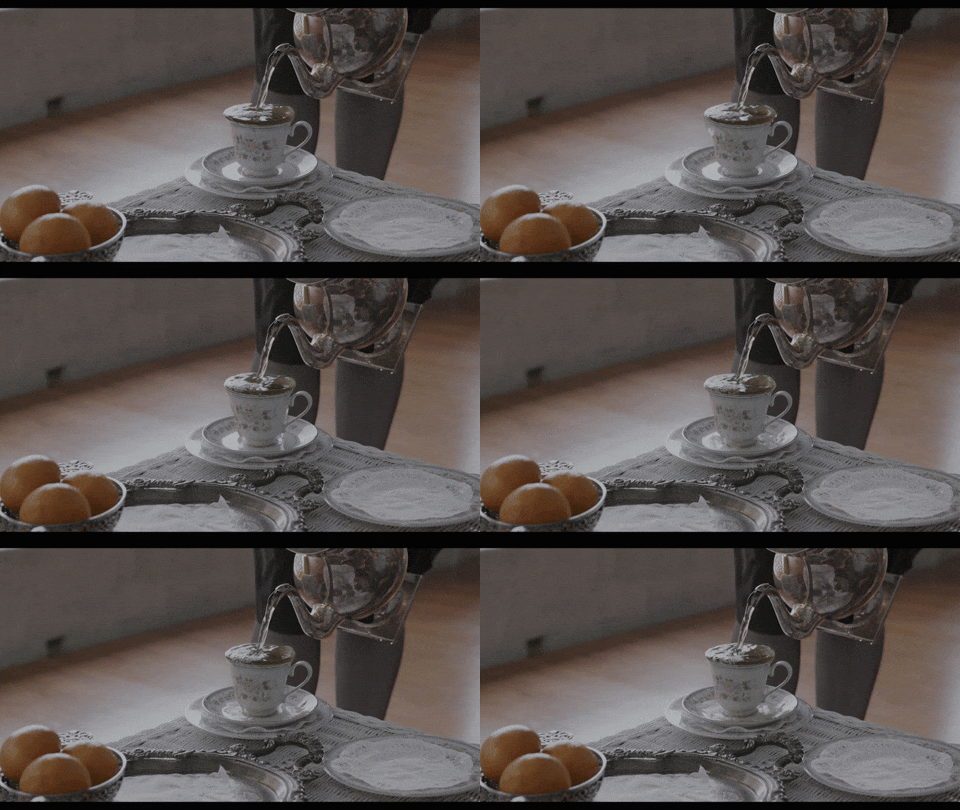
There is an old eastern story about a renowned Burmese monk, a highly educated man, and a cup of tea. The story goes like this. The highly educated man sets out on a journey to seek out the wise old monk – a Zen Master – in hopes of learning and opening his mind to Zen.
The monk first invites the man to come into to his hut and sit down for a cup of tea. The educated man sits down and just starts talking about Zen and all that he knows. The educated man talks and talks. The monk simply listens, quietly prepares the tea, then begins to pour. When the tea is filled to the brim of the man’s cup, the monk just keeps pouring.
The man watches the cup overflow until he could no longer restrain himself. “It’s full! No more will go in!”
“The same with you,” the monk replies. “How can I teach you Zen unless you first empty your cup?”
The monk first invites the man to come into to his hut and sit down for a cup of tea. The educated man sits down and just starts talking about Zen and all that he knows. The educated man talks and talks. The monk simply listens, quietly prepares the tea, then begins to pour. When the tea is filled to the brim of the man’s cup, the monk just keeps pouring.
The man watches the cup overflow until he could no longer restrain himself. “It’s full! No more will go in!”
“The same with you,” the monk replies. “How can I teach you Zen unless you first empty your cup?”
Are you a worrier?
I am. Always have been. I do think this is both good and not so good. Some nights, my head hits the pillow and my brain decides it’s time to solve and work out my most complicated problems.
Worry and deep thinking is not all bad. Stress is bad. There is nothing profound in that last sentence, but thinking through different scenarios and outcomes is actually helpful. I was never in the military, but historically war games have effectively and safely been played out via computer simulations, and more recently, AI.
As candidates and hiring managers though, we can drive ourselves nuts playing out too many iterations and scenarios. Lawyers can’t effectively function without thinking through possible scenarios that may spring from the actions by opposing parties and court systems. To me, there is a fine line between worry and deep thinking, and I cross that line a lot.
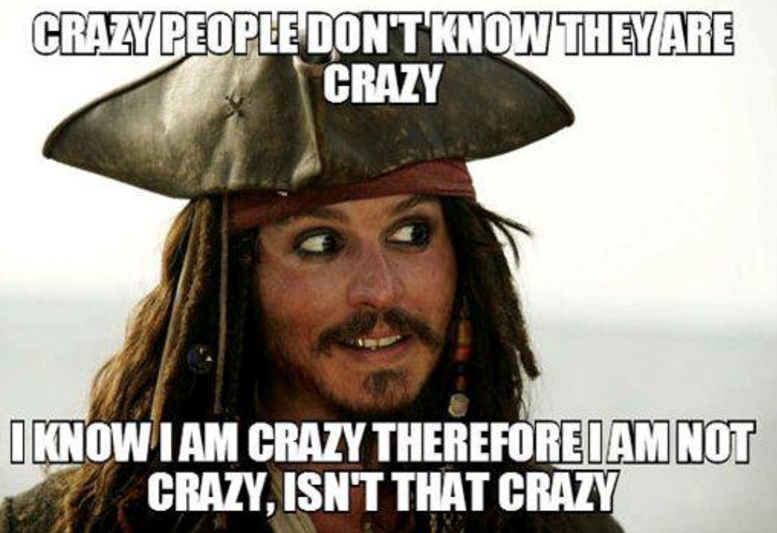
Do you know why a crazy person does what they do?
Of course you don’t — because you’re not crazy. Ever say to yourself, “That was crazy. Why would somebody do that?”
At some point, we run across people in our lives who do things that just don’t make any sense. The results can be poor financial outcomes, or self-destructive or irresponsible choices that negatively impact a lot of people. There are so many times I’ve wondered just how much thought went into a decision. It could be a ton. It could be a whim. You may never even know.
“So, I just gotta ask. Why did you do that?”
When the answer comes as back a bunch of gobbledygook or other nonsense, that’s usually my cue to run – if I can. I’m not the smartest guy, but I generally do know what not smart looks like. In the first half of my career, I would run into the rare taxpayer who wanted to argue that the U.S. Constitution doesn’t actually require them to file income tax returns or pay income taxes — an argument that’s pure nonsense and can land the taxpayer in prison and the paid preparer could lose their CPA license.
What can you actually control?
This is a great question you can ask yourself, and there’s a good chance the answer should dictate how you proceed. We do control our reactions, our words, and our attitudes. For better or worse, we do control our habits, like diet and exercise.
When the answer comes as back a bunch of gobbledygook or other nonsense, that’s usually my cue to run – if I can. I’m not the smartest guy, but I generally do know what not smart looks like. In the first half of my career, I would run into the rare taxpayer who wanted to argue that the U.S. Constitution doesn’t actually require them to file income tax returns or pay income taxes — an argument that’s pure nonsense and can land the taxpayer in prison and the paid preparer could lose their CPA license.
What can you actually control?
This is a great question you can ask yourself, and there’s a good chance the answer should dictate how you proceed. We do control our reactions, our words, and our attitudes. For better or worse, we do control our habits, like diet and exercise.
We cannot control other people’s behavior or random events. We also cannot control what others think of us, and we certainly cannot control getting older. Worrying about what we can’t control leads to restlessness, irritability, and nothing good.
Conclusion
The moral of the story about the Burmese monk, the cup of tea, and the educated man that talked too much is that we can’t learn when we think we already know the answer. For me, that story also cements the saying ‘that nobody ever learned from talking’. Control what you can. Empty your cup so you can fill it fresh by listening to understand.
Bill Wednieski is the Managing Director for The Headhunters. Learn more here.